
Comprehensive Exploration of Nidhivan Temple: An In-Depth Guide to Its History, Mysteries, and Cultural Significance
Discover the intriguing mysteries and rich cultural heritage of Nidhivan Temple, a revered site shrouded in legends and spiritual significance. This comprehensive guide explores its fascinating history, the enchanting rituals, and the secrets that make Nidhivan a must-visit destination for devotees and curious travelers alike. Dive deep into the temple’s captivating stories and uncover the timeless allure that continues to mystify visitors from around the world.
Introduction to Nidhivan Temple
Nestled in the heart of Vrindavan, Uttar Pradesh, India, the Nidhivan Temple stands as a revered spiritual site renowned for its mystical aura and deep-rooted significance in Hindu devotion. Located just a few kilometers from the famous Banke Bihari Temple, Nidhivan is an integral part of the sacred landscape that celebrates the divine pastimes of Lord Krishna. This temple is not only a place of worship but also a symbol of the rich spiritual heritage that has attracted pilgrims and curious travelers for centuries.
Nidhivan holds a special place in the hearts of devotees who seek to connect with Lord Krishna, especially in his form as Bihari or Banke Bihari. Its spiritual importance is intertwined with legends, rituals, and stories that evoke a sense of wonder and devotion. As a site that embodies both history and mystery, Nidhivan continues to be a focal point for those eager to explore the divine mysteries associated with Lord Krishna’s leelas.
The purpose of this guide is to delve into the temple’s fascinating history, uncover the legends that surround it, explore its unique rituals, and highlight its cultural relevance. Whether you are a devout follower or a curious traveler, understanding Nidhivan’s multifaceted significance offers a deeper appreciation of its enduring spiritual allure.
The Rich History and Mythology of Nidhivan
Origins and Historical Background of Nidhivan Temple
The origins of Nidhivan are shrouded in legend and history, with some sources suggesting that the temple dates back several centuries. It is believed to have been established during the period of the Bhakti movement, which emphasized devotion to Lord Krishna. The temple complex, with its intricate architecture and sacred groves, reflects the traditional styles of North Indian temple design.
Over the centuries, Nidhivan has evolved into a spiritual hub, closely linked with the nearby Bihari Temple and other historic sites in Vrindavan. Its significance grew as stories of Lord Krishna’s divine pastimes in Vrindavan became more widespread, attracting pilgrims from across India and beyond.
Legends and Mythological Stories Associated with Nidhivan
One of the most captivating aspects of Nidhivan is the plethora of legends that surround it. According to popular belief, Nidhivan is the sacred forest where Lord Krishna performed his divine leelas with Radha and the Gopis. The name “Nidhivan” itself is derived from “Nidhu” meaning sleep and “Van” meaning forest, hinting at the divine sleep or mystic secrets held within.
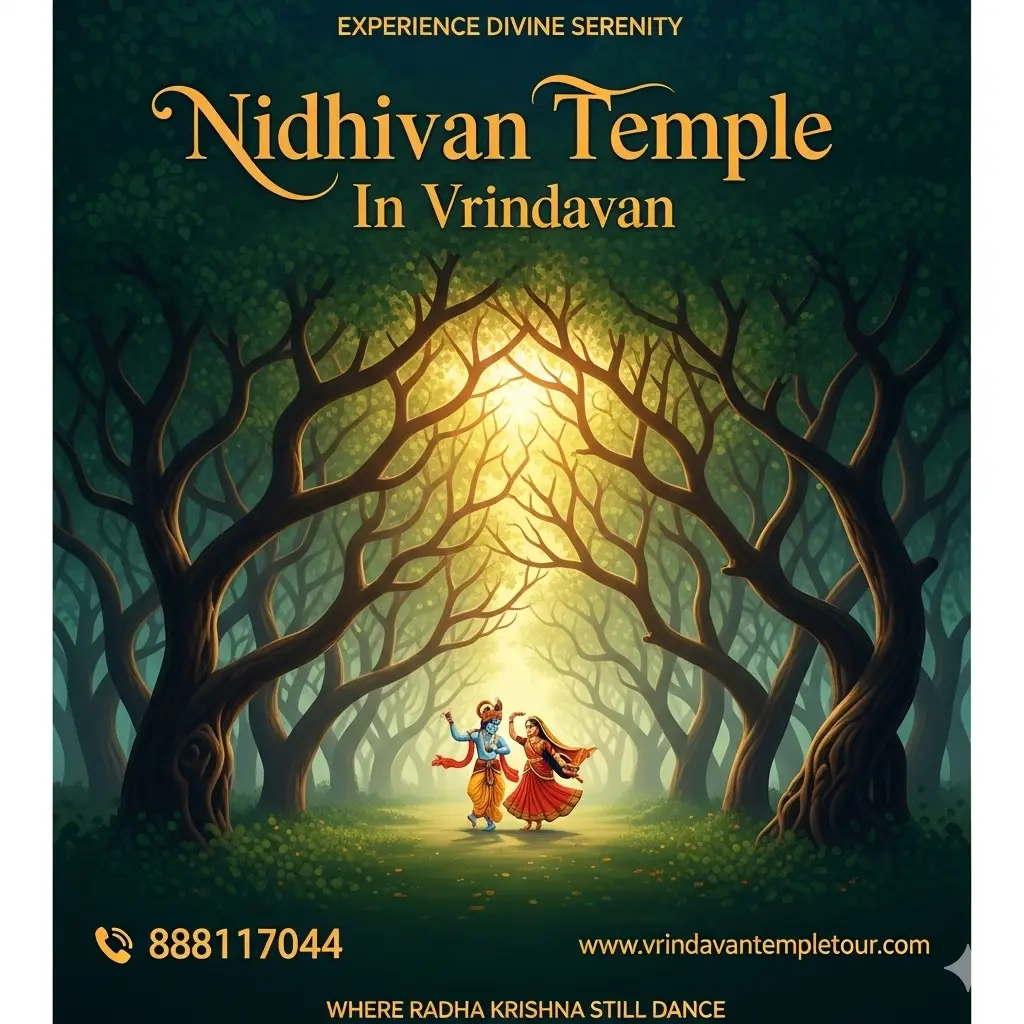
A prominent legend narrates that every night, the spirits of Radha and Krishna come alive in the form of divine dancers, performing enchanting Ras Leelas in the forest. These nocturnal activities are believed to be so sacred that the temple is closed at sunset and reopens only at dawn, preserving the sanctity of these divine dances.
The Divine Dance of Lord Krishna and Radha
The Ras Leela, a divine dance performed by Lord Krishna with Radha and the Gopis, is central to the spiritual mythology of Nidhivan. This dance symbolizes the eternal love and devotion between the divine couple and is considered a cosmic event that transcends time and space.
Locals and pilgrims believe that the spirits of Radha and Krishna continue their eternal dance within the sacred groves of Nidhivan during the night, unseen by mortal eyes. This mystical phenomenon adds to the temple’s aura of mystery and devotion.
The Legend of the Sacred Forest and Its Mystical Powers
The forest of Nidhivan is regarded as a mystical zone where divine energies are concentrated. It is said that the trees and the surroundings possess divine powers, and the entire area is protected by spiritual forces. The sacred trees, especially the Bansi Chor Radha Rani (the flute-stealing Radha Rani), are believed to be imbued with divine presence.
Historically, the forest has been a place of meditation and spiritual practice, attracting sages and devotees who seek the blessings of Lord Krishna. Its mystical reputation is reinforced by stories of divine miracles and the unexplainable phenomena that occur within its bounds.
Architectural Features and Historical Structures
While Nidhivan is primarily known for its spiritual and mythological significance, it also features traditional North Indian temple architecture. The complex includes small temples, sacred groves, and intricately carved stone structures that reflect the craftsmanship of ancient artisans.
Over the centuries, the temple has undergone renovations, but its core spiritual essence remains intact. The architecture complements the natural beauty of the forest, creating an environment conducive to devotion and meditation.
Evolution of Nidhivan’s Spiritual and Cultural Significance
Throughout history, Nidhivan has maintained its status as a sacred site dedicated to Lord Krishna. Its legends have been passed down through generations, reinforcing its importance in the cultural fabric of Vrindavan. The temple’s rituals, festivals, and nightly mysteries continue to attract a steady stream of pilgrims, ensuring its place as a living testament to the divine leelas of Lord Krishna.
Mysteries, Rituals, and Unique Practices at Nidhivan
The Enchanting Nightly Rituals and Secrecy
One of the most intriguing aspects of Nidhivan is its nightly routine. As dusk falls, the temple is closed, and no one is allowed to enter until dawn. This practice is rooted in the belief that Radha and Krishna’s divine spirits perform Ras Leela during the night, and any disturbance could disrupt their celestial dance.
Devotees and visitors are often told to respect this tradition, and the temple’s closure at sunset adds an air of mystique. Some believe that the spirits of Radha and Krishna continue their divine dance in the sacred forest, unseen by mortal eyes, maintaining the sanctity of their eternal leela.
The Legend of Dancing Radha and Krishna Spirits
According to local lore, the spirits of Radha and Krishna appear in the form of divine dancers during the night. These spirits are said to dance gracefully, enchanting anyone who witnesses their celestial performance. The phenomenon is considered a divine secret, and only a few fortunate devotees claim to have glimpsed these divine spirits.
The Practice of Temple Closure at Dusk and Opening at Dawn
The tradition of closing Nidhivan at sunset and reopening at sunrise is a unique practice that emphasizes the sacredness of the night-time divine activities. It is believed that entering the forest during these hours could disturb the divine leelas, which are considered too sacred for mortal interference.
Significance of Sacred Trees and Divine Presence
The trees in Nidhivan, especially Radha Rani’s Bansi (flute), are regarded as manifestations of divine energy. Devotees believe that these sacred trees are living symbols of Lord Krishna’s pastimes and serve as spiritual anchors for their devotion.
Rituals Performed by Devotees
Devotees visiting Nidhivan often engage in offerings, prayers, and meditation. They may leave flowers, incense, and sweets at the sacred trees or in front of small temples within the complex. The rituals symbolize devotion and seek the blessings of Lord Krishna, Radha, and the divine spirits believed to dance in the night.
The Role of Music, Dance, and Devotional Offerings
Music and dance are integral to the spiritual ambiance of Nidhivan. Devotional songs, bhajans, and traditional dances are performed during festivals and special occasions, echoing the divine Ras Leela. These practices help devotees connect with the divine leelas and deepen their spiritual experience.
Cultural Significance and Visitor Experience
Why Nidhivan Is a Must-Visit Destination
Nidhivan’s unique blend of history, mythology, and mystique makes it a must-visit site for pilgrims and travelers alike. Its enchanting legends, nightly rituals, and spiritual ambiance offer a profound experience that transcends ordinary tourism.
Impact on Local Culture, Traditions, and Festivals
Nidhivan influences local festivals and cultural practices, especially during Janmashtami and Holi, when celebrations are vibrant and deeply rooted in devotion. The temple also fosters a sense of community among devotees, preserving age-old traditions.
Tips for Visitors
- Respect the sanctity: Follow the temple’s rules, especially regarding the closure at sunset.
- Best times to visit: Early mornings or during festivals when rituals are performed.
- Explore quietly: Observe the sacred trees, participate in offerings, and soak in the spiritual atmosphere.
- Check-in checkout: Ensure respectful conduct, especially if participating in rituals or attending special ceremonies.
The Ongoing Allure and Mystique
The mystique surrounding Nidhivan continues to attract pilgrims, spiritual seekers, and curious tourists from around the world. Its legends, divine energy, and the promise of witnessing the divine dance keep its allure alive.
Preservation and Sanctity
Efforts are ongoing to preserve Nidhivan’s spiritual sanctity and natural beauty. Respectful tourism and community involvement are vital to maintaining its legacy for future generations.
Conclusion
Nidhivan Temple stands as a testament to the divine leelas of Lord Krishna, blending history, mythology, and mystique into a captivating spiritual experience. Its legends of Radha and Krishna’s eternal dance, the sacred forest, and nightly rituals continue to fascinate and inspire devotees and visitors worldwide.
The enduring mystery and spiritual allure of Nidhivan make it a unique and sacred destination. As visitors explore its enchanting surroundings, it is essential to approach with reverence and respect, honoring its legacy and preserving its sanctity.
Understanding and appreciating Nidhivan’s rich history and spiritual significance not only deepens one’s devotion but also helps safeguard this divine heritage for generations to come. Whether you are drawn by its legends, its cultural vibrancy, or its mystical energy, Nidhivan remains a timeless symbol of divine love and devotion.